Retinal detachment is a medical emergency where the light-sensitive retina pulls away from the back of the eye, which in turn separates it from the blood and nutrient supply. This eye condition causes tremendous pain and can lead to vision loss. Retinal detachment surgery in Siliguri can help your retina to get reattached and restore your vision. Thus, the key is to seek timely diagnosis and treatment so that the ability of the retina to process signals can be restored by using modern surgical techniques. According to the American National Eye Institute, the success rate of modern retinal detachment surgery is more than 90%.



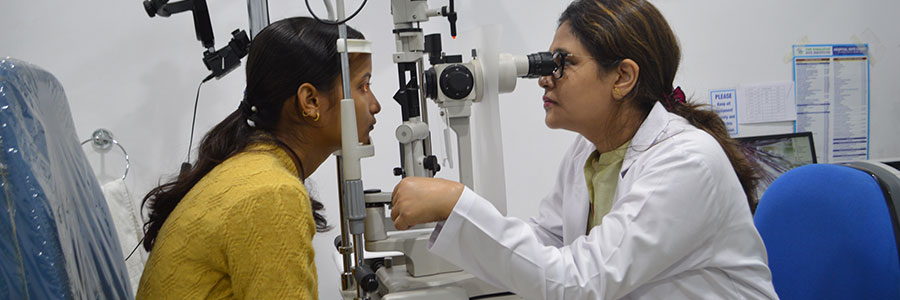
Dr Sangeeta Goswami understands the significance of timely treatment for retina detachment. In the context of such an eye condition, even a short delay can result in irreversible eye damage. As one of the best retina specialists in Siliguri, she uses advanced vitreoretinal surgery. For more than 9 years, Dr Goswami has delivered successful retinal detachment surgeries with an excellent track record of early diagnosis. By booking an early consultation, you can minimize the risk of severe complications.
Patient Treated
Years of Service
Surgeries Performed
Injections / Lasers

Dr. Sangeeta D. Goswami
MS (Ophthal), FICO, FRF, VR Fellow, Retina Specialist
The first thing you need to consider before undergoing retinal detachment surgery in Siliguri is the surgeon’s expertise and the technology used. One of the most trusted names that emerges when people seek safe and effective retinal detachment surgery is Dr Sangeeta Goswami. Over the years, she has earned an outstanding reputation for managing and treating complex retinal conditions with precision. Her commitment to a patient-centric approach and use of advanced technology has restored vision and brought hope to countless patients.
Dr Sangeeta Goswami has completed her MBBS from Guwahati Medical College. After completing her MBBS, she did an MS in Ophthalmology from Assam Medical College. In addition, she has received training on Retinopathy of Prematurity at Narayana Netralaya, Bangalore. Currently, she is practising as an Eye Surgeon in the Himalaya Eye Institute in Siliguri.
Some of her prominent areas of expertise in the field of retina care are:
- Retinal detachment surgery
- Diabetic retinopathy management
- Macular degeneration
- Retinal vascular occlusion
- Retinopathy of prematurity (ROP)
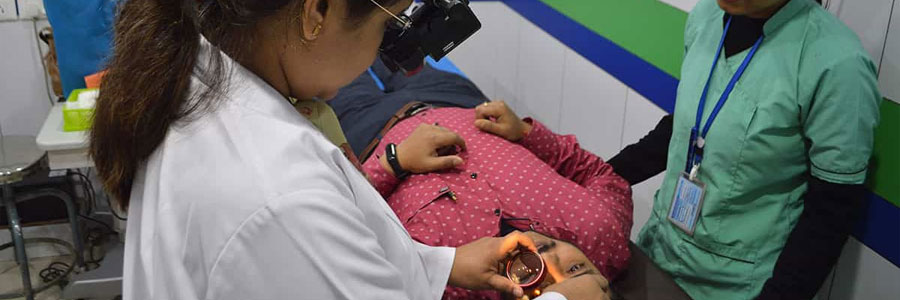
What is Retinal Detachment Surgery?
Retina detachment occurs when the light-sensitive retina separates from the underlying supporting tissue at the back of the eye. When this separation occurs, the retina fails to receive oxygen and essential nutrients, which are crucial for a healthy vision. In addition, if retinal detachment is not treated quickly, it can lead to permanent vision loss. Patients who seek retinal detachment in Siliguri often complain about sudden visual disturbances that require immediate medical attention. By understanding the common conditions of retinal detachment, you can make room for better awareness and timely intervention.
Here are some of the common causes of retinal detachment:
- Aging-related vitreous changes
- Eye injury or trauma
- Severe myopia (high-power glasses)
- Diabetic eye disease
- Previous eye surgery
- Family history of retinal problems
- Retinal thinning or degeneration
What are the Common Symptoms of Retinal Detachment?
One of the most worrying aspects of retinal detachment is that it appears suddenly and worsens rapidly. Thus, it becomes important to identify the early warning signs, which in turn lead to timely intervention and prevention of permanent damage. If you are looking for the best retinal detachment surgery in Siliguri, the first step is to know the symptoms that might be a potential indicator for such a surgical requirement. Remember, delay in seeking treatment can lead to irreversible damage or progressive vision loss.
Here are some of the common symptoms to watch out for:
- Sudden flashes of light (photopsia)
- Floaters (black spots, threads, or cobwebs)
- Shadow or curtain effect on vision
- Blurred or distorted vision
- Sudden decrease in vision clarity
- Peripheral (side) vision loss
- Difficulty seeing in low light
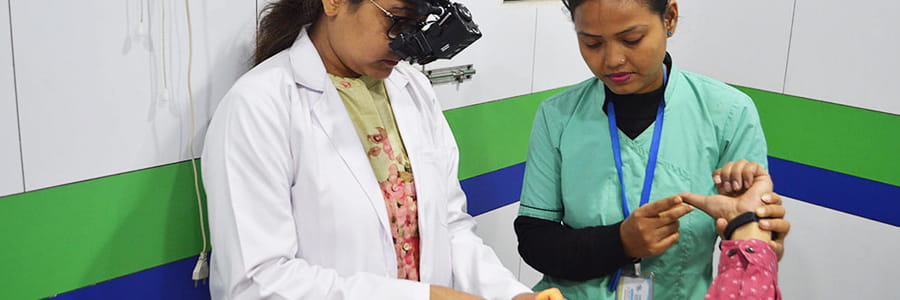
Diagnosis for Retinal Detachment in Siliguri
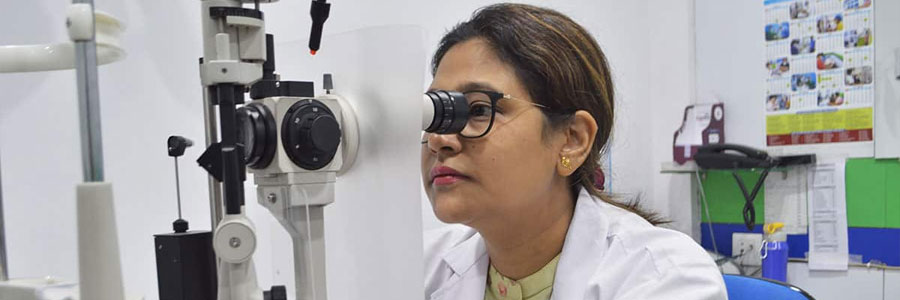
It is a well-known fact that accurate diagnosis holds the key to effective treatment for any condition. A detailed eye check-up can help in determining the type, location, and severity of the detachment. Doctors and hospitals offering treatment and surgery for retinal detachment in Siliguri are renowned for using advanced diagnostic tools so that precise evaluation can be ensured. For better safety and assurance, both eye check-ups are performed to rule out the risk of retinal detachment. Overall, timely and accurate diagnosis plays a vital role in terms of improving the success rate of surgery.
These are some of the most common diagnosis method for retinal detachment:
- Retinal examination with special lenses
- Dilated eye exam for a detailed retina view
- Ultrasound imaging (especially if bleeding is present)
- Optical coherence tomography (OCT)
- Visual acuity and vision testing
- Fundus photography
- Eye pressure measurement
Various Types of Retinal Detachment Surgery in Siliguri
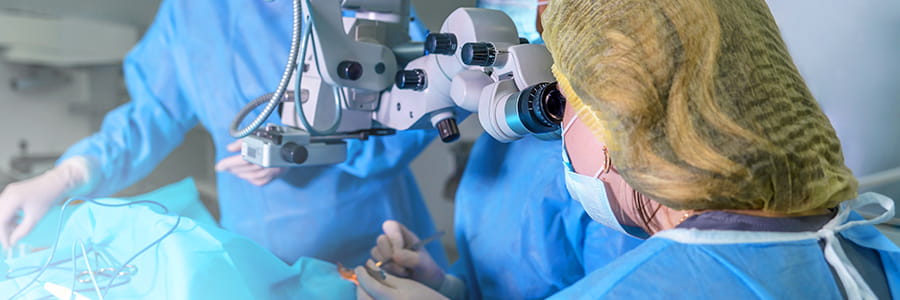
The most relevant type of retinal detachment surgery depends on the type, location, and severity of the detachment. Advanced techniques tend to help in precise repair and maximum vision recovery. Patients who seek the best retinal detachment surgery in Siliguri are evaluated by using advanced diagnostic methods so that the most relevant surgical type can be determined. The main purpose of each surgical process is to reattach the retina and prevent further vision loss. However, there are several instances where a combination of treatments is suggested for better outcomes.
Here are the three most common and effective types of retinal detachment surgery:
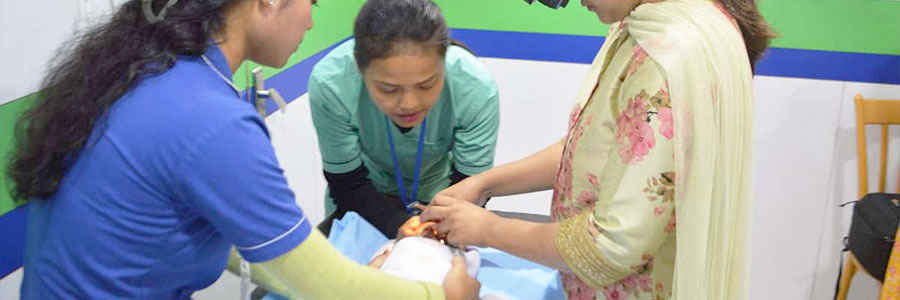
Pneumatic Retinopexy
This is a minimally invasive procedure in which a gas bubble is injected into the eye to push back the detached retina into its normal position. Laser or freezing techniques are mostly used by retina surgeons to seal the tear causing detachment. Overall, this is generally a quicker process and promotes a shorter recovery time as compared to other surgical procedures.
- Less invasive with faster recovery
- Suitable for specific, uncomplicated detachments
Scleral Buckling
This surgical process is used to repair rhegmatogenous retinal detachment by placing a silicone band (buckle) around the eye's white layer (Sclera). The main purpose of using this technique is that the band pushes the sclera inward, which in turn closes retinal tears and relieves traction. Scleral buckling is commonly used for younger patients, and it has a high success rate.
- Effective for long-term retinal support
- Commonly used for moderate detachments
Vitrectomy Surgery
This is a specialized surgery used for complex or severe retinal detachments. The procedure involves removing the vitreous gel so that traction can be eliminated. After that, the retina is attached using silicone gel, along with laser or cryotherapy to seal tears. Thus, the eye surgeon can access the retina better, which in turn promotes precise repair.
- Ideal for complex or recurrent detachments
- Allows precise internal repair of the retina

Patient Testimonials

Doctor heard everything very patiently then explained it really well after checking, she was transparent gave clarity overall had a good experience and would recommend her as she's a very good doctor.
Alankar chatterjee,
Siliguri My wife is a patient of Dr. Sangeeta Goswami.
She is excellent doctor. After 2 days of treatment my wife's vision is very good. She couldn't see anything for last few days , But today her vision is improved.
Thank you doctor.
Her staff and whole hospital service is excellent.
Bimal Sarkar,
Siliguri One of the most eminent expertise Retina Surgeon in this belt of Bengal.
Tuhin,
SiliguriWhy Choose us for Retinal Detachment Surgery in Siliguri?
To undergo a retinal detachment surgery in Siliguri, choosing the right specialist holds tremendous significance because the success of the surgery relies massively upon the expertise of the retina surgeon. It has been observed that patients most often need a combination of advanced technology, clinical expertise, and personalized care. Dr Sangeeta Goswami ensures that every patient receives a personalized surgical approach based on the type, location, and severity of the retinal detachment. Her focus is not solely on surgery but rather on ensuring a holistic surgical plan, which promotes safe recovery and vision preservation.
Here are some of the top reasons that set Dr Sangeeta Goswami apart from other eye specialists:
High-level experience in retina conditions
With more than 9 years of experience, she has an excellent track record of handling both simple and complex retina cases. In addition, her qualifications and specialized training make her a trusted retina surgeon.
Advanced surgical techniques
She uses modern surgical procedures, such as vitrectomy, scleral buckling, and pneumatic retinopexy. All these procedures, when combined with state-of-the-art facilities, lead to precise and effective results.
Personalized treatment plans
Dr Sangeeta Goswami does not believe in a "one-size-fits-all" approach because the condition of retinal detachment differs from individual to individual. Thus, she makes personalized treatment plans for safe and effective outcomes.
Focus on long-term vision preservation
Her main focus is to ensure stable vision and prevent future retinal complications, which is ensured through proper follow-up care.
Frequently Asked Questions
Q. What is the success rate of retinal detachment surgery?
The success rates of retinal detachment surgery depend massively on the expertise of the retina surgeon and the technology being used. Generally, the success rate is around 80 - 90% when the surgery is performed at earlier stages.
Q. Which surgery is best for retinal detachment?
There is no “single” best surgery for retinal detachment. The type of surgery is decided by the type, severity, and location of the retinal detachment. As one of the best retina surgeons in Siliguri, Dr Sangeeta Goswami uses modern surgical procedures, such as vitrectomy, scleral buckling, and pneumatic retinopexy, depending on the individual condition.
Q. How many hours does retinal detachment surgery take?
Retinal detachment surgery generally takes around 1-3 hours, depending on the type and severity of the detachment. In addition, the type of surgical procedure being used determines the time that will be required.
Q. Is retinal detachment surgery painful?
No, retinal detachment surgery in Siliguri is generally performed under anaesthesia with sedation. Thus, patients do not feel pain during the surgery. However, mild pain and discomfort might occur during the recovery.
Q. Can retinal detachment be cured permanently?
Surgery proves to be effective in terms of successfully reattaching the retina. However, long-term monitoring becomes essential. By choosing Dr Sangeeta Goswami, you can ensure effective retinal detachment surgery and regular follow-ups under one roof, which is crucial for a healthy and stable retina.
Q. Can a detached retina heal without surgery?
No, retinal detachment cannot heal on its own. Timely and effective surgical intervention is necessary to reattach the retina and prevent permanent vision loss. Therefore, you must not ignore symptoms of retinal detachment.
Q. What happens if retinal detachment is not cured?
Retinal detachment is a serious condition that must not be left untreated. This is because retinal detachment can lead to irreversible vision loss or permanent blindness.
Q. Why should I choose Dr Sangeeta Goswami for retinal detachment surgery?
Dr Sangeeta Goswami is one of the best retina surgeons in Siliguri with more than 9 years of experience. She has an excellent track record of successfully diagnosing and treating retinal detachment by using high-level expertise and advanced technologies.
Q. Where can I get the best retinal detachment surgery in Siliguri?
You can visit the clinic where Dr Sangeeta Goswami practices for retinal detachment surgery in Siliguri near you. She uses a patient-centric approach for offering personalized surgical plans. Therefore, you can ensure a safe and effective surgical outcome.
Q. Do I need a consultation before retinal detachment surgery?
Yes, a consultation is mandatory before a retinal detachment surgery to ensure a comprehensive eye examination. A detailed eye examination allows the specialist to determine the type, location, and severity of the detachment, which in turn helps in deciding the most relevant surgical procedure.